Michal Galus, Ph.D.

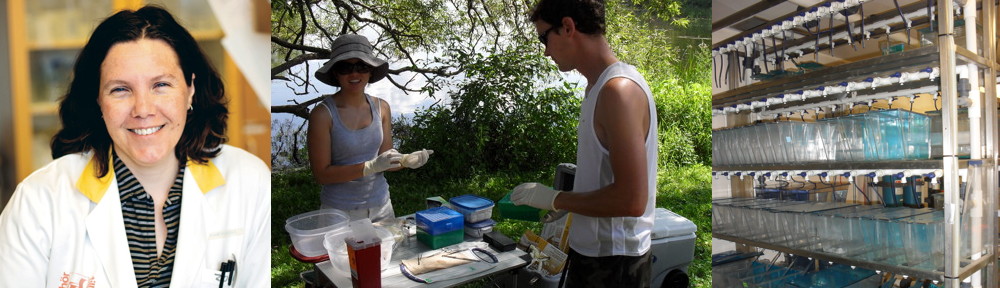
Michal Galus has been a graduate student in my lab for the last 5 years, working on his PhD.  He completed his BSc degree at McMaster in Biology and got his first taste of toxicology in the lab of Dr. Grant McClelland working on metal toxicology in zebrafish.  He entered my to start his MSc and helped launch a new research program; the impacts of human pharmaceuticals on fish.  Much of Michal’s research has focused on four drug; acetaminophen (common analgesic), carbamazepine (anti-epileptic and mood stabilizer), gemfibrozil (lipid regulator), and venlafaxine (anti-depressant).  The research started with one question in mind: Do low concentrations of human drugs cause negative effects in fish?

in the wild, human drugs are entering the aquatic environment through our waste water treatment plant discharge.  Contrary to what many might think, the direct use and excretion of drugs and their metabolites into sewage, is the major source.  These compounds are emerging as contaminants of concern because studies, like those that Michal has completed during his PhD, are showing that chronic exposure to low concentrations decrease reproduction, disrupt normal development, and cause cellular changes in major organs such as the kidneys.

Michal successfully defended his PhD on August 29 and is now completing final edits on his dissertation.  Congratulations Mike on a job well done!
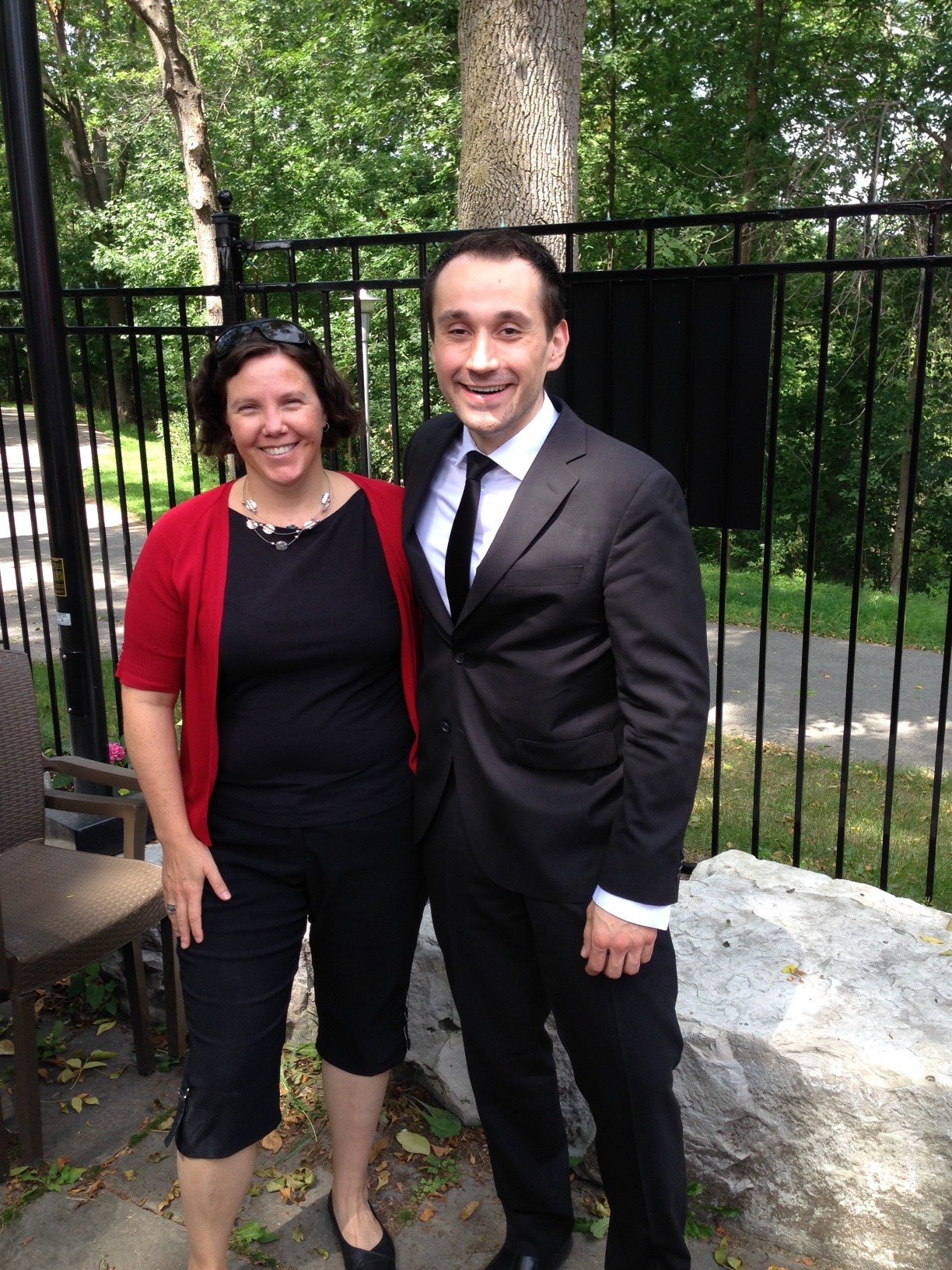
Galus grad

Summer Researcher Emily Hulley

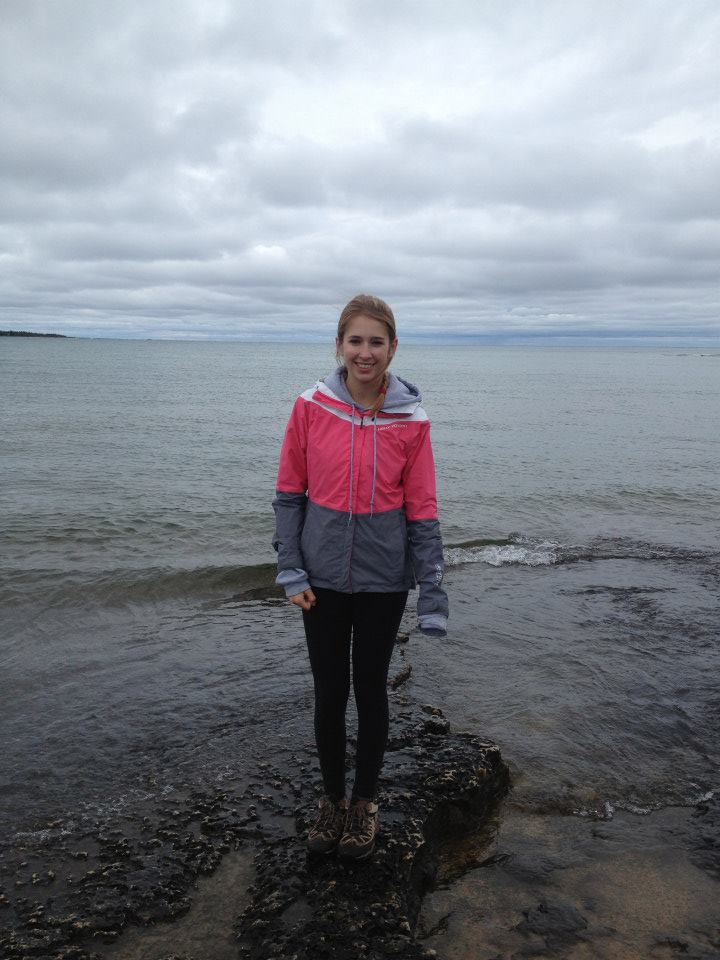
Emily Hulley is just completing her second summer working in the lab on whitefish morphometrics.  Returning students are always a great addition to the lab because they come with existing lab skills and help with the training of the new students experiencing research for the first time.  Emily worked with Chris Thome and Charles Mitz over the last two summers and as she returns to University of Guelph for her last year, we wish her the best in completing her degree and graduating.  Here she describes her summer research.

Emily Hulley, Fourth year Bsc.  Honours Marine and Freshwater Biology student, University of Guelph

I have been studying the effects that formalin and ethanol preservation techniques on the morphometrics and weights of whitefish hatchlings and eggs. I have also been assisting in the research of various chemical, thermal and radiation stressors on the development of whitefish through imaging and morphometrics. Lastly, I’ve been working with cell culturing rainbow trout gonad cell lines (RTG-2 cells) to investigate the different effects that radiation and thermal stressors have on cell survival. 
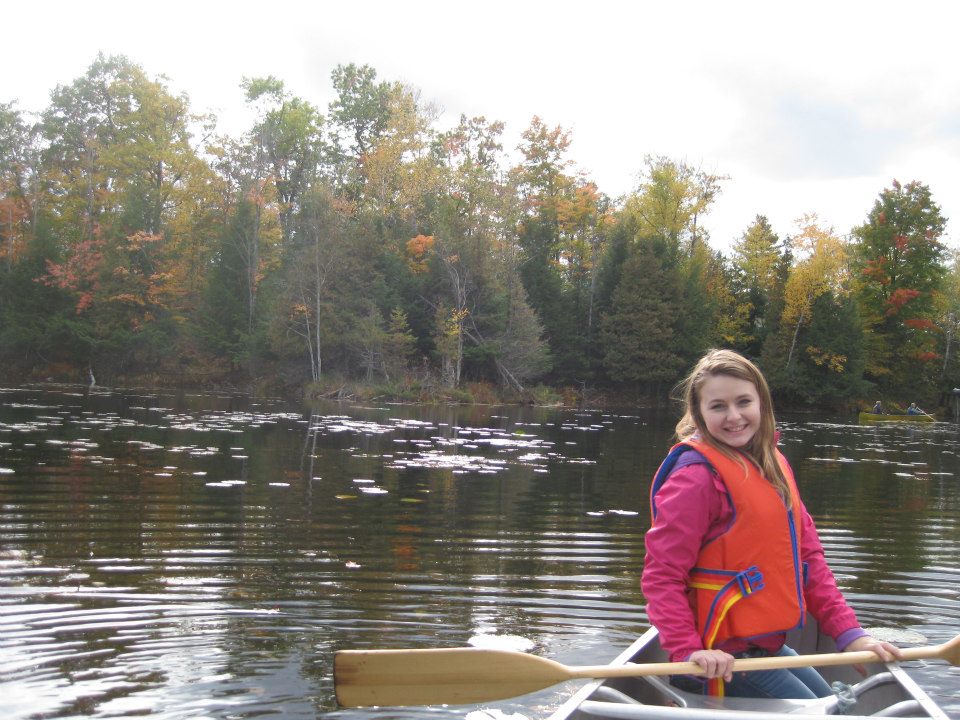
Outside of the lab, I spend most of my time outdoors hiking/camping, with friends or playing with my kitten.

Emily Hulleytobermory

Meet the Amazing Undergraduates Doing Research this Summer

In a series of posts, I will ask each of the amazing summer students to introduce themselves and their research project.  This summer we have had plenty going on and the research the summer students are doing is greatly impacting our lab.

Charlotte Mitz, Expected Bsc. Honours Biomedical Sciences, University of Guelph, Class of 2015.

Charlotte has been working on our whitefish project, primarily with Chris Thome, a PhD candidate.

I image and perform morphometrics on the whitefish embryos to assist research investigating the effects of various stressors (including chronic morpholine exposure, temperature fluctuations, and the effects of radiation) on whitefish development. I have been culturing rainbow trout gonad cells (RTG-2 cells) to examine the effects of radiation and temperature fluctuations on cell growth and survival.

Outside of work, I’m currently studying for the MCAT and like to spend time with my friends and family.

CharlotteMitzphoto

CSZ Success

The WilsonToxLab regularly attends the Annual Meeting of the Canadian Society of Zoology and this year was no exception.  Indeed, there were nine of us in attendance and lots to see from the WilsonToxLab in terms of presentations.  Mike Galus, Eugene Choi, Casey Mueller, John Eme, Chris Thome, Charles Mitz and Joanna Wilson all presented recent research results from the lab.  In addition, our collaborators at U Regina, Chris Somers and Richard Manzon, had students from our whitefish project presenting: Carly Graham, Becca Eberts, Dan Stefanovic and Katy Session all gave great whitefish talks.  Go Team Whitefish!  Since most of Team Whitefish was at the Montreal meeting, we stayed an extra day for a project meeting making this an extremely useful trip for our research program.

This year, the meeting was in Montreal and a bit unusual as CSZ partnered with two other Canadian societies (Ecology and Evolution and Limnological) for the first ever joint meeting.  That added a whole new flair and the opportunity to see a much wider range of science.  The plenary presentations were excellent and I really enjoyed the Fry Medal presentation to Dr. Glen van der Kraak from U Guelph.  Glen is a great scientist and it was wonderful to see him talk at length about the intersections of his basic (fish endocrinology) and applied (endocrine disruption) research streams.  It is a much deserved award.

There was a bit more politics at this meeting than usual and it came on two fronts: women in STEM and the role of science in public policy.  CSZ had a panel of all male invited speakers and award winners and apparently there was some animated discussion on the society Facebook page about why there were no women.  An invited speaker even started his talk by commenting on the lack of women giving plenary presentations and why he felt this was a problem.  What was interesting was the discussion and response from CSZ.  They have collected some data, recognized this is an issue, and formed a group to discuss how to fix the issue.  Amongst members that were discussing this at the meeting with me, there was solid support for change.  So I say good for CSZ for responding to the comments quickly, with an open mind and the motivation for change.  We need young women in science fields to see that things are getting better.

The second interesting change was all the discussion about scientists engaging in public policy and advocacy for the role of science in society.  I haven’t seen this at a conference before and it reflects the ongoing belief that our current government is anti-science.  Interesting discussions all round this topic for sure.

When PBS comes calling

Getting interviewed by journalists has to be one of the most uncomfortable things for a scientist to experience.  You want to be accurate, clear, concise.  You want to share important information in a way that is accessible to everyone.  The problem is that we are used to talking in terms that make things less clear – we don’t talk in black and white but in grey.  We speak in very technical language to other people who are used to speaking likewise, not with people who need plain speak.  Communicating our ideas becomes problematic when things aren’t yes or no.  With practice, I hope to get better at this.

Recently, I was approached by  a science journalist at PBS’ Nova Next about being interviewed for an article about human drugs in the environment.  As this is something we focus on in the Wilson lab, I agreed and sent some of our recent publications.  As always, I asked for a copy prior to print and as always, I didn’t get one.  Weirdly, I found out this was published by a colleague emailing to ask, “Did you really say that?”  which is not a good sign.  In the end, there are a few misquotes but much of the article is correct and interesting.  So what is wrong?

1. Human drugs are in the environment because we take drugs, not because we dispose of drugs incorrectly.  Yes, you shouldn’t flush unused medication down the toilet but we excrete the drugs, or a metabolite of the drug, from our body (i.e. pee them out).  This is the major contributor to drugs in the environment.

2. Acetaminophen, but not all drugs, are well removed by conventional wastewater treatment.  Acetaminophen, and some other drugs, are removed at rates up to 95-98% BUT other drugs, like some antidepressants and mood stabilizers, pass through wastewater treatment plants untouched.  This is a major point because we don’t yet have the solutions to water treatment.

So with these corrections in mind, feel free to follow the link to an article that quotes me profusely….

http://www.pbs.org/wgbh/nova/next/body/pharmaceuticals-in-the-water/