Successful defence for Jack Salole!

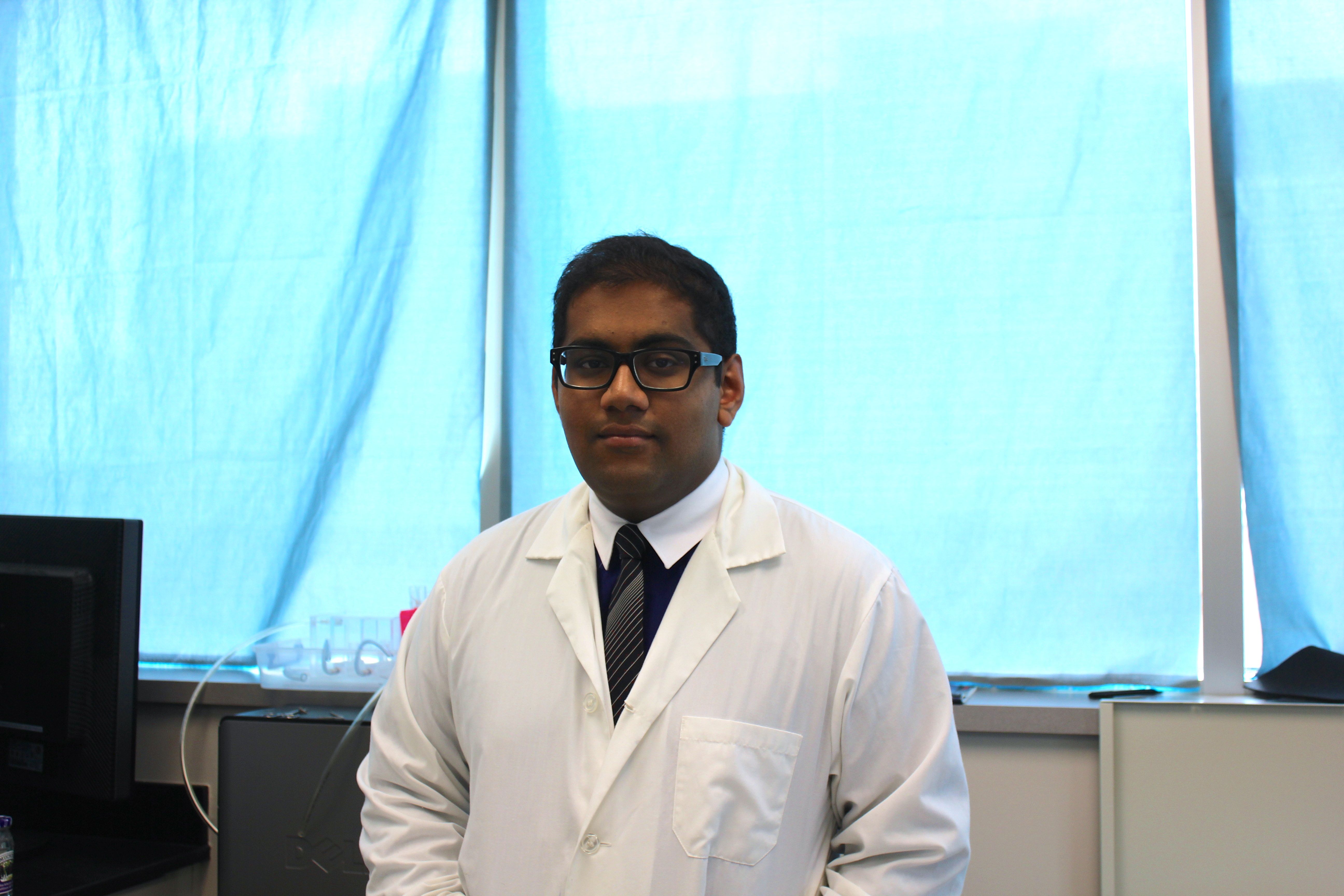
MSc student Jack Salole successfully defended his MSc on September 12! His research has focused on using the RTgill-W1 assay to determine toxicity of pulp and paper mill effluents. His first publication focused on optimizing the assay for commercial labs and is published in ET&C! Look for future publications from his MSc. https://academic.oup.com/etc/article/44/11/3101/8238156

Jack will be working at Nautilus Environmental this fall and we look forward to welcoming him back to start his PhD in January 2026!

New MSc Student Molly joins the lab!

We are happy to welcome Molly Dobrik to the WilsonToxLab! Molly is a new MSc student and completed her undergraduate degree at the University of Waterloo. Molly has previously worked in a number of toxicology projects, as a co-op student at the Centre for Inland Waters in Burlington. That experience in toxicology will be a great springboard to her MSc, where she will be using the Fish Embryo Toxicity Test in a comparative study with several fish species.

Summer 2025 Research

We have well started summer term and so many new things going on in the lab. Mellissa just came back from the Woods Hole Oceanographic Institution, where she spent 2 months learning some molecular docking. Mellissa is an NSERC CGS-M holder and was awarded a Michael Smith foreign study supplement, which made this exciting training opportunity a reality. We are excited to dig into this data, where she is comparing the molecular docking results to our in vitro high throughput screening data to see if the in silico approaches predict the in vitro data.

Both Hunter and Max, our newer graduate students, have been awarded scholarships. Hunter won an NSERC CGS-M and Max and OGS and we are super happy for both of them. Hunter is currently off in France taking advantage of a research opportunity with Sigal Balshine and Grant McClelland that is unrelated to his thesis. Max is here training our Mitacs Global links interns Sydnee and Julia and McMaster undergraduate Clarice. Clarice was a research course student last year working on some enrichment for fish and is doing her thesis in the lab next academic year. This group will begin to test some of our top hits from prior high throughput screening of CYP3A65 and CYP3C1 to assess embryo toxicity. Max’s research is focused on the extrapolation of our in vitro expressed proteins in vivo, using embryo exposures in zebrafish with and without his genes of interest. The CYP3A65 knock out line is from our collaborator, Jed Goldstone ( WHOI) and we hope to first identify if any of the substrates for these enzymes induce embryo toxicity and then will assess whether the KO line has a change in the toxicity or compound metabolism. We hope to screen several compounds this summer in our wild type fish, while the KO lines grow up.

Jack and Mellissa are both in their second year and are working up data and finishing experiments over the summer. They are looking closer and closer to finalizing experiments and data analyses for their thesis.

Lastly, I am looking forward to being on research leave soon. I have a few things on the list for the summer, including getting a renovated fish room fully on line and some grant writing. I will probably also be testing some protein expression parameters, which have proved rather finicky in the last 2 years. Hope everyone else is having a great summer of research.

Research Leave is where?

Research leave has rolled around and again, it seems to follow family catastrophe.  I *thought* we would be in Bergen, Norway right now but new elder care duties seriously cancelled that plan. So now I am local.  Research Leave in Hamilton!!!  At the end, it looks like COVID might have cancelled things anyways because I am not sure relocating in the middle of the largest wave of the pandemic would have been so attractive.  Still, it was Norway and I am missing the sea.

My priority for research leave has always been to do something significant for my research program.  For my first, I spent 13 months in Sweden and this was where I fist started doing behavioural research with fish.  I also learned to experiment with primary hepatocytes, although this hasn’t been incorporated in my lab in the same way.  That is mostly because the results of the experiments were a bit blah and unexciting for the compounds we were testing in hepatocyte culture.  But the behavioural research is a different story.  Now we have added in a suite of behavioural assays in different life stages.  For juvenile and adults, we have used courtship, aggression, behavioural choice experiments with odorants and thermal preference tests. For larval fish, we now do a whole range of swimming (general swimming, light:dark response, thigmotaxis), startle responses and feeding behaviour.  My year away pushed us in a new direction that has been rewarding.

So what is on the table this year?  Planning is still an active process but one thing is for sure is that I have some training and planning to do. First, is training to work with human subjects as we have some projects that will cross into social sciences.  The other major training need is to brush up on transcriptomics analyses and R so that we are better equipped for some of the new data we will be generating in the next few years.  Second, is planning for both the lab and field for our perch embryo experiments. We learned so much from last year’s experiments and have to adjust. We will adjust the lab for better rearing protocols and really minimize some of the labour issues we encountered last year. We are adding  new lights to help with feed training the larval fish too. We are also adjusting our field sites and I need to get new permits in place. This is really exciting and I already have new Windermere traps under construction with the engineering lab.  I can’t wait for perch spawning.

Recruitment begins

I’m not sure I can adequately describe the size or scale of the impact in our lab over the last year+ but this pandemic was dishing things out left, right and centre.  I feel like we are at a nexus of where the pandemic really delayed and harmed our research program.  The personal impacts for many in my group have likewise been large and the largest goal was to try to keep all of us upright, in science, and keeping our heads above the water.  In that regard, we need to reassess and redefine success over the last year.  We have survived (!!) and this was largely from the resilience of our group, as much as I think that is an overused term.  But we did get through this year together, pivoting efforts, helping each other, focusing on what we could do, taking things one step at a time.  Now we are starting to see progress in projects again and productivity is starting to leap back up.  That provides some space to look forward and plan for the future.  Let’s start with some lab success stories.  I’ll add in where we will be recruiting in the upcoming year in these projects.  A detailed outline of our open positions in 2021-2022 will be posted, so please check them out and get in touch if you are interested in our research program.

When the pandemic shut down McMaster, yellow perch were spawning and we were about to launch into working with a brand new species.  Waiting a full 12 months to restart was very hard but spring 2021 saw us undertaking the experiments we canceled the year before (and then some!) with very good outcomes.  The lab (especially Shamaila Fraz) came roaring back with ambitious plans that were very fruitful and lots of experiences in testing new protocols to help move research plans forward.  I am quite excited to see the data collection from our new samples and the analyses from the data already collected.  It will shape the direction of our research into developmental plasticity and impacts of temperature on fish development.  Much of our work this year focused on embryogenesis and immediate post-hatching periods while we work on the juvenile rearing stages. Perch are definitely a bit tough to rear post-hatching, compared to the other species we have worked on.  No surprise but we certainly learned some things not to do to keep them happy.  We are looking to recruit for this project in the upcoming months so we are ready to take on spring 2022 spawn.

While we graduated two graduate students from the lab in 2021, clear success stories, these were students who were done data collection prior to university shut down.  Other graduate students in the lab faced much bigger challenges. With major lost experiments and one totally new project later, we forged a new plan to get back on track. I’m really excited about these new directions.  Andrea Murillo has a freezer full of samples taken from our culture of the marine polychaete worm, Capitella teleta, and she is now extracting those samples to get geared up for gene expression and steroid hormone analyses.  Shemar Williams has completed a suite of experiments in zebrafish embryos and on track to finish his MSc.  Its great to see these project humming along.  This also means it is time to think about new graduate students in 2022 interested in the function of cytochrome P450 enzymes using either zebrafish or Capitella as a primary species of interest.

Success, of course, has also been obvious in more traditional ways. We have been so happy to celebrate Oana Birceanu’s success this year as she starts her new role at Western’s Physiology and Pharmacology department as an Assistant Professor. I look forward to continued collaboration and engagement with her research group in the years to come.

**  If you are interested in our lab, please check back under “Recruitment Opportunities” for more details in the upcoming days. I will be posting specific information there.  The much needed refresh of the lab website is just beginning.